S A X D
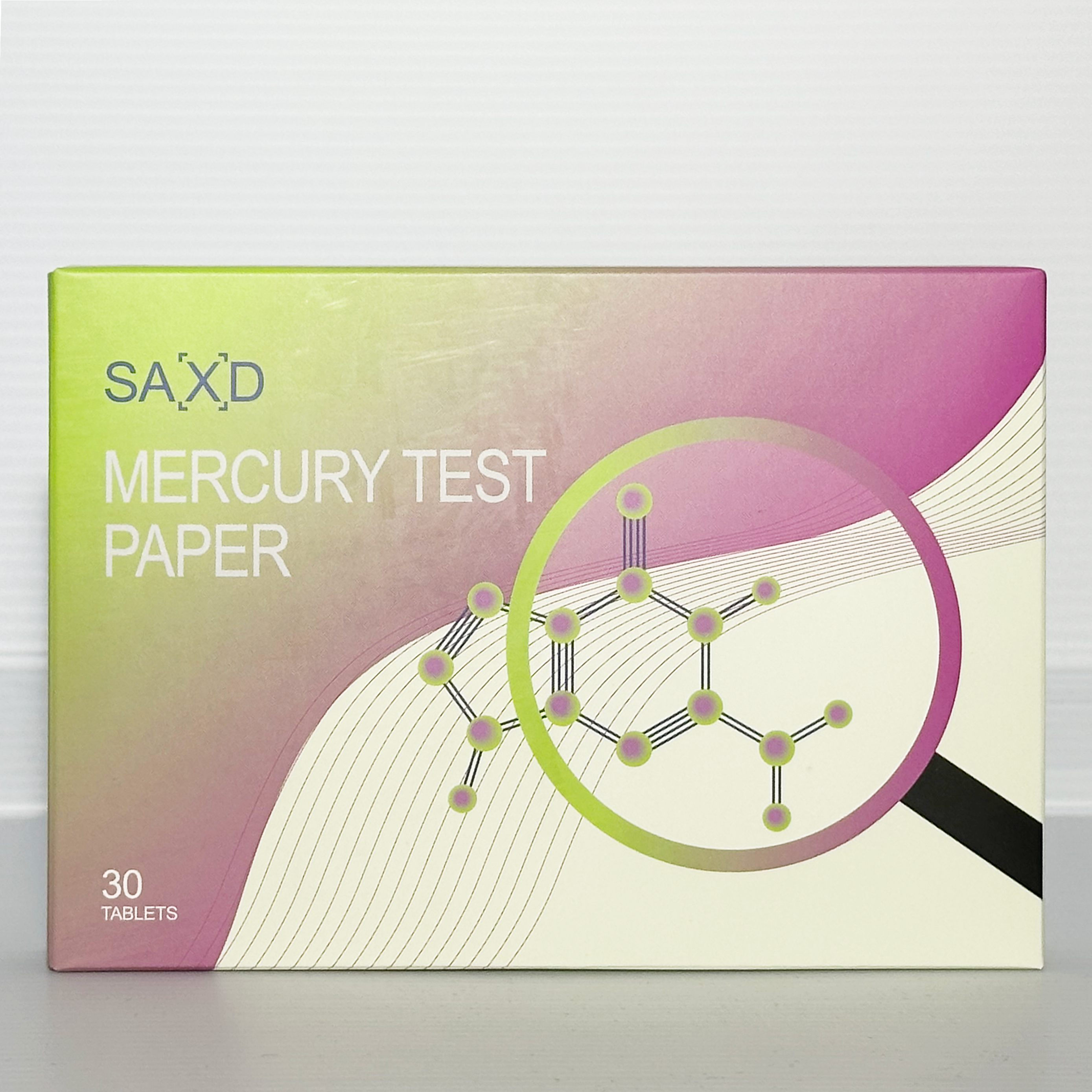


Test Paper Sensitivity: This test paper has a detection limit of 0.003 mg/m³ for mercury in air and 0.5 mg/L for mercury concentration in water.
Identification of Mercury in the Environment: Place mercury test strips in the indoor environment or on floor crevices after a mercury spill, for 1 to 24 hours. Compare the tested strips with unused ones. A positive result is indicated by the appearance of yellow or orange color on the test strips.
Detection of mercury concentration in water or cosmetics: Insert the test strip into the sample solution for 2–3 seconds, shake off excess liquid, and after 3 minutes, compare it with the control color card to determine the mercury concentration in the sample solution. For viscous cosmetics, use the test strip application method for detection.
This method is a rapid on-site detection method; precise measurements should be based on laboratory methods.
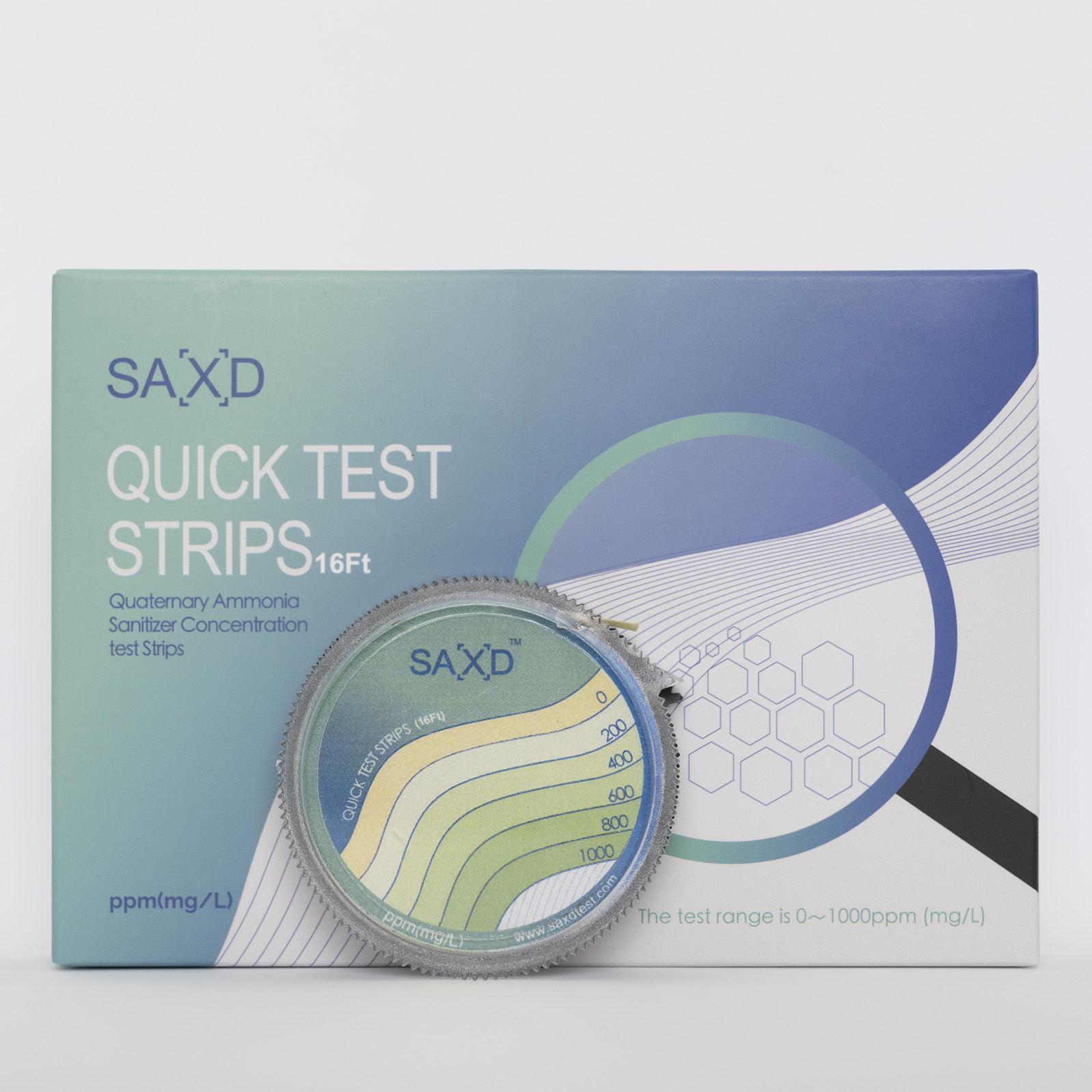
Quaternary Ammonium Sanitizer Concentration Test Strips


Intended Use:
This method is suitable for on-site rapid test of quaternary ammonium concentration in quaternary ammonium sanitizer. E.g. testing single-chain or double-chain quaternary ammonium such as cetyl trimethyl ammonium bromide, double decyl dimethyl ammonium chloride, tetradecyl dimethyl benzyl ammonium chloride, etc. The test range is 0~1000ppm (mg/L).
Instructions:
1 Loosen the lid of the box, pull out 2-3cm of the test strip and tear it off;
2 Immerse the test strip in the sample for 1~2 seconds, take it out and shake off excess liquid;
3 Compare the result with the color scale within 4 to 8 second-time window;
4 Sample with higher concentration can be diluted before measuring. When determining the concentration, multiply the result by the dilution factor.
5 Keep the test strip box sealed in a bag.
A simple device for measuring mercury concentration in the air


1 Scope of Application
This device can quickly and accurately determine whether the mercury concentration in indoor air exceeds the standard. It is applicable for detection after mercury spills in laboratories, or breakage of mercury thermometers and sphygmomanometers to check if indoor air mercury content exceeds limits. Sampling takes about 1 hour. The detection limit is 0.003 mg, and the linear range is 0.01 ~ 1.0 mg/m³.
2 Significance of Detection
Excessively high mercury concentration in the environment is harmful to human health. A simple and feasible rapid detection method is beneficial.
3 Equipment Configuration
1 set of mercury measuring device, 1 bottle of mercury test strips (30 pieces), 1 color comparison chart, 1 pair of tweezers.
4 Detection Procedures
4.1 Keep doors and windows closed for at least 1 hour before testing;
4.2 Connect the power supply following the video instructions;
4.3 Load and unload test strips as shown in the video;
4.4 Use tweezers to take one test strip from the bottle. The test strip has no front or back side. Place it on the air inlet of the device, fasten the cover until a click sound is heard;
4.5 Place the device at the mercury spill site or the center of the room. Lay the hose (exhaust pipe) horizontally or vertically, switch on the power and start timing. After the air pump runs for 56 minutes (nearly 1 hour), manually turn off the power;
4.6 Take out the test strip, compare the color on the circular concave surface of the test strip with the color card for quantitative analysis. If the strip color is darker than the first color patch of 0.01mg, the mercury amount exceeds the permissible limit.
5 Notes
5.1 The plastic box of this device serves as a bracket and storage container. The air pump connection may get loose during transportation; reposition it following the illustrations before use.
5.2 The test strip is highly sensitive to mercury vapor, but will not develop color when directly touching liquid mercury droplets. This is an on-site rapid detection method. Precise quantification shall refer to national standard methods.
5.3 The test strips contain trace cuprous iodide, which generally causes no harm to human body. Tweezers are recommended for sensitive/allergic persons to handle test strips. Used test strips may be disposed of as ordinary household waste.
5.4 Tighten the bottle cap immediately after taking out test strips, to prevent mercury vapor entering the bottle and discoloring unused strips.
5.5 The test strips of this device can be used independently. Place them in floor cracks where mercury spilled. Observe within 2~24 hours. Color change of the test strip indicates residual mercury in the cracks.